DNV GL
A Norwegian shipping-certification company that opened over thirty offices in China to work close to its customers. It stays Norwegian in culture and ethics wherever it operates: place-sourced, and a partner in the communities it enters.
The problem, the long arc toward regeneration, and the convictions and capital architecture RDC works from.
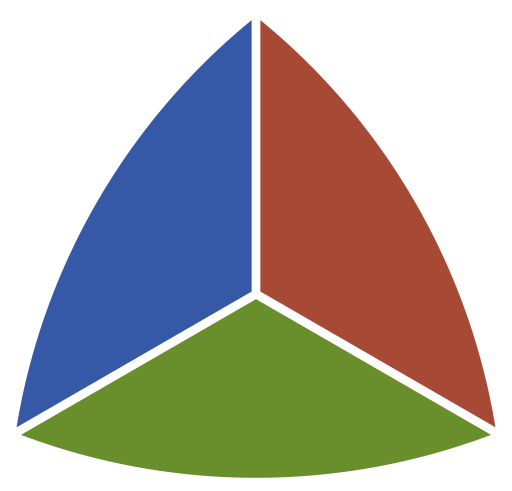
Whole-systems development has worked where it was tried — but it had no financial architecture to carry it. Markets are built to reward the opposite. These are not moral failings; they are design flaws in how capital itself is structured.
Resilience-based assets go unfunded — so capital keeps financing collapse.
Projects imposed on places breed fragility. Preservation requires participation.
Short-term screens miss long-cycle value. System health compounds over time.
Public, private, and philanthropic flows sit in silos; value leaks between them.
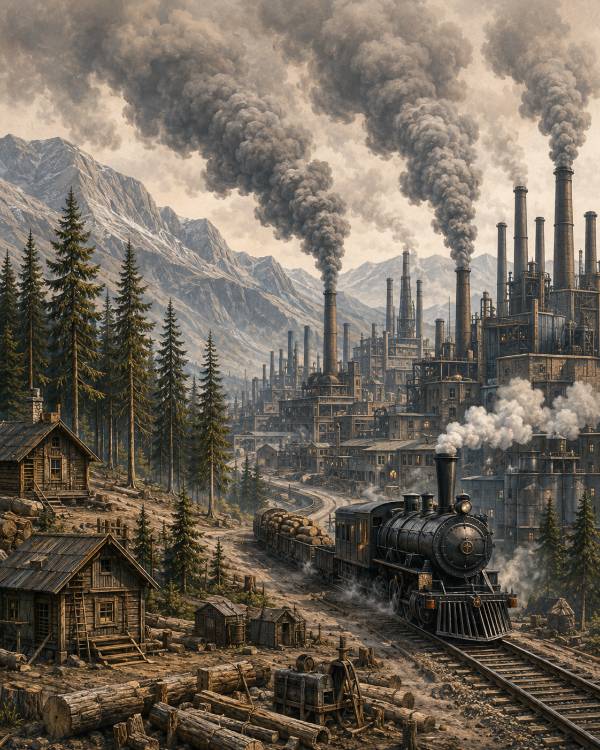
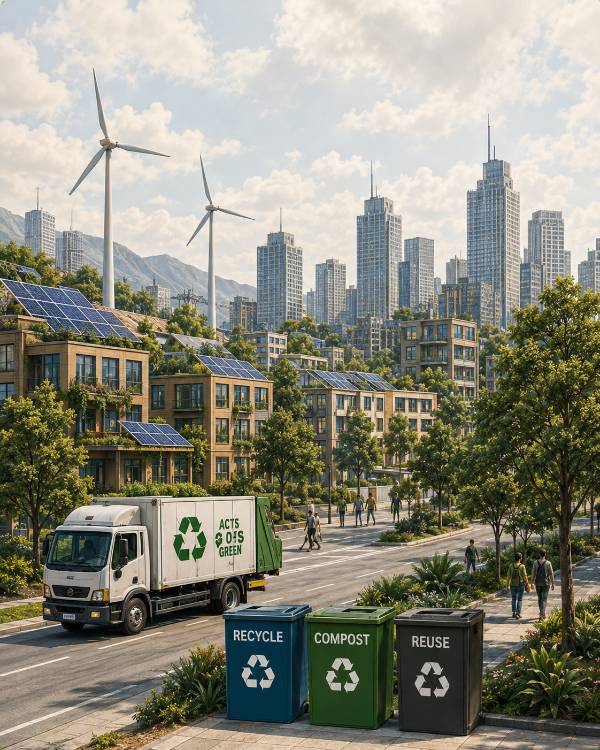
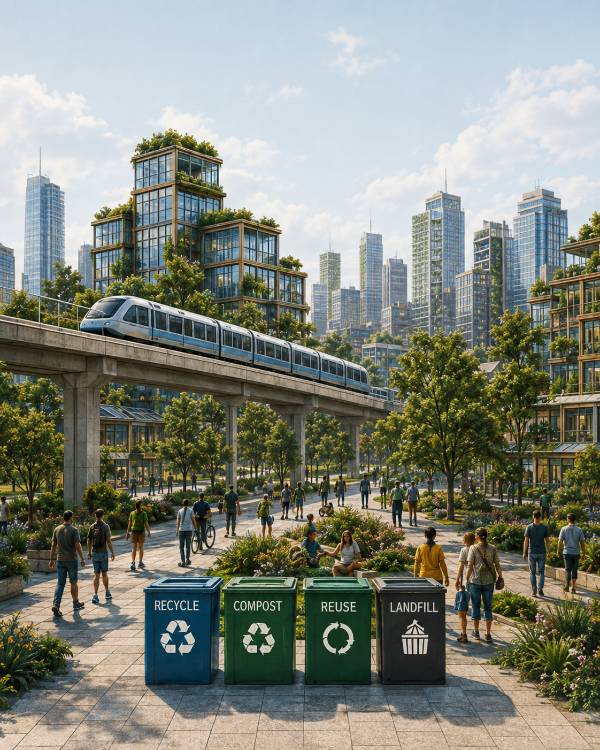
For decades, ecological design has been moving along a single trajectory, from exploiting the Earth toward stewarding it. Each step is real progress. Green and sustainable design reduce harm; restorative design repairs it. Only regenerative design increases the capacity of living systems to thrive.


Extraction accelerating collapse — doing more harm than the system can absorb.
Economic, social, and ecological systems made to thrive together — net more life.
A few basic principles sustain life on the planet. Forests, soils and rivers follow them. Following them is what we do.
A forest works as one system. Trees, fungi, soil and water are connected, and mycorrhizal fungi link roots underground.
A company reads itself as one living whole inside its place: land, workforce, customers, suppliers and community, counted together as five capitals.
Brattleboro Food Co-op began by uncovering its place's potential, not by fixing sustainability problems, and became a driver of local regeneration. Regenesis Group ↗
Every valley has its own character, set by its geology, climate, water and species. No two watersheds run alike.
A company works out the role it was made to play in its place, and does not copy a template strategy from somewhere else.
Regenesis calls this the Story of Place: the essence of a place and the role its inhabitants can play in its evolution. Regenesis Group ↗
On bare ground, pioneer species such as lichens, grasses and birch arrive first and prepare the soil for what follows.
A company builds the capacity its place is already moving toward, so each stage creates conditions for the next, and it does not impose a result.
Pioneer species alter soil and shade, which lets slower, longer-lived species establish. University of Chicago ↗
A tree sits in a stand, the stand in a forest, the forest in a watershed. Each level depends on the one above it.
A company sits inside supply chains, communities and regions. It carries the risks of the larger systems it depends on.
Over half of world GDP, about $44 trillion, is moderately or highly dependent on nature and its services. World Economic Forum ↗
A forest matures over decades, in order, from pioneers to long-lived climax species. It can't be hurried.
A company is capitalised for the long horizon, accepting a slower start for returns that compound as the system builds.
Moving farms to regenerative practice can take three to five years before returns of 15 to 25% appear. BCG and WBCSD ↗
Trees pass sugars to mycorrhizal fungi. The fungi return nitrogen, phosphorus and other minerals drawn from soil and rock.
A company gives to its place and gets back: healthier soil, lower input cost, a more resilient supply and a community that stays.
Some US farmers cut fertilizer use by 50% and pesticides by up to 75% while raising yields. WBCSD ↗
A Norwegian shipping-certification company that opened over thirty offices in China to work close to its customers. It stays Norwegian in culture and ethics wherever it operates: place-sourced, and a partner in the communities it enters.
More than eighty autonomous cooperatives in Spain's Basque region, with about €11 billion in annual sales. They are networked like a mature forest, with their own bank and university, pooling profits and sharing resources.
A fifty-year-old initiative in Egypt that has greened the desert. It brings together hundreds of small farms, businesses and education centers around one regenerative purpose.
The Chouinard family placed the company in a purpose trust with Earth as its sole beneficiary. “Instead of going public, we’re going purpose.” They gave up billions in financial wealth to do it.
Fullerton also names the B Corp movement, with nearly ten thousand companies, as an early expression of the same pattern. He notes that no single company is a full example of a regenerative economy, and that the unit that matters is the whole business ecosystem.
A planning and tracking platform that treats a city as a nested living system. It is privacy-first and human-centered, built to cut operating costs and track long-term impact.
Structural building products made with regenerative agriculture. They sequester CO2 and are fireproof, windproof and mold-proof, a replacement for concrete, steel and wood.
Virtue-based education centered on regenerative living systems. It combines hands-on curriculum with models for mental health, from K–12 up.
Third-party research and examples, shown for context. These are not RDC results or projections. Fungal networks are an active research area, and scientists debate how much they share resources between trees.
Regeneration is not a sector we invest in — it is the lens through which we underwrite everything. Four convictions shape where our capital goes and how it behaves once it arrives.
Conventional capital externalizes what it cannot measure. We treat the health of natural, human, social, built and financial capital as the underlying asset — and measure all five, together.
We do not force a timeline onto a place. Build begins when the land can carry it — and the communities that make it possible share directly in what it produces.
Mission-locked covenants and dual reporting (Pricing NAV and Impact NAV) keep the discipline intact at scale, so the place is never sacrificed to the return.
Technology that amplifies and creates potential across five capitals and provides insight and acceleration.
Regenerative Development Corp is the answer to the design flaws — a regenerative private-equity firm that gives whole-systems development a Nexus fund to carry it. We founded the Planetary Regenerative Trust to blend philanthropic, public, and private capital into one mission-locked vehicle, and we originate the technology and enterprise companies that serve its places; the Nexus fund gets first look at every one.
The Planetary Regenerative Trust, a Delaware Statutory Trust under Reg D 506(c), holds all three lanes. Each lane is valued under the standard its asset class already uses.
Land, master development, remediation, hospitality and mixed-use, under permanent stewardship covenants.
Improvements to soil, water and habitat, independently verified under VLAS, then held as assets.
Technology, materials and education companies RDC originates. The Nexus fund gets first look at each.
The RDC Portfolio Company is a holding company formed to invest in four sectors of regenerative development. It can hold equity and debt in any company within them, and it gives each one a shared platform for verification, reporting and governance. The Nexus fund gets first look at every company it originates.
Conventional financial value, reported quarterly.
Regenerative performance across five capitals, reported alongside it.
The Planetary Regenerative Trust publishes interactive models for each lane, so the capital flow, credit and stewardship logic can be tested rather than only described.
Land-backed projects: capital structure, scenarios and debt-service coverage.
Credit calculators, Five Capitals scoring and verification tools.
Place-based data and investor overlays for enabling companies.

The models are open to use. For analysis against a specific project, start a conversation.